Every week, founders and business owners come to us with the same question: "I have an idea. Where do I start?"
The honest answer: not with code. Most failed software projects don't fail because of bad developers. They fail because the problem was unclear, the first version was too big, or the system couldn't grow with the business.
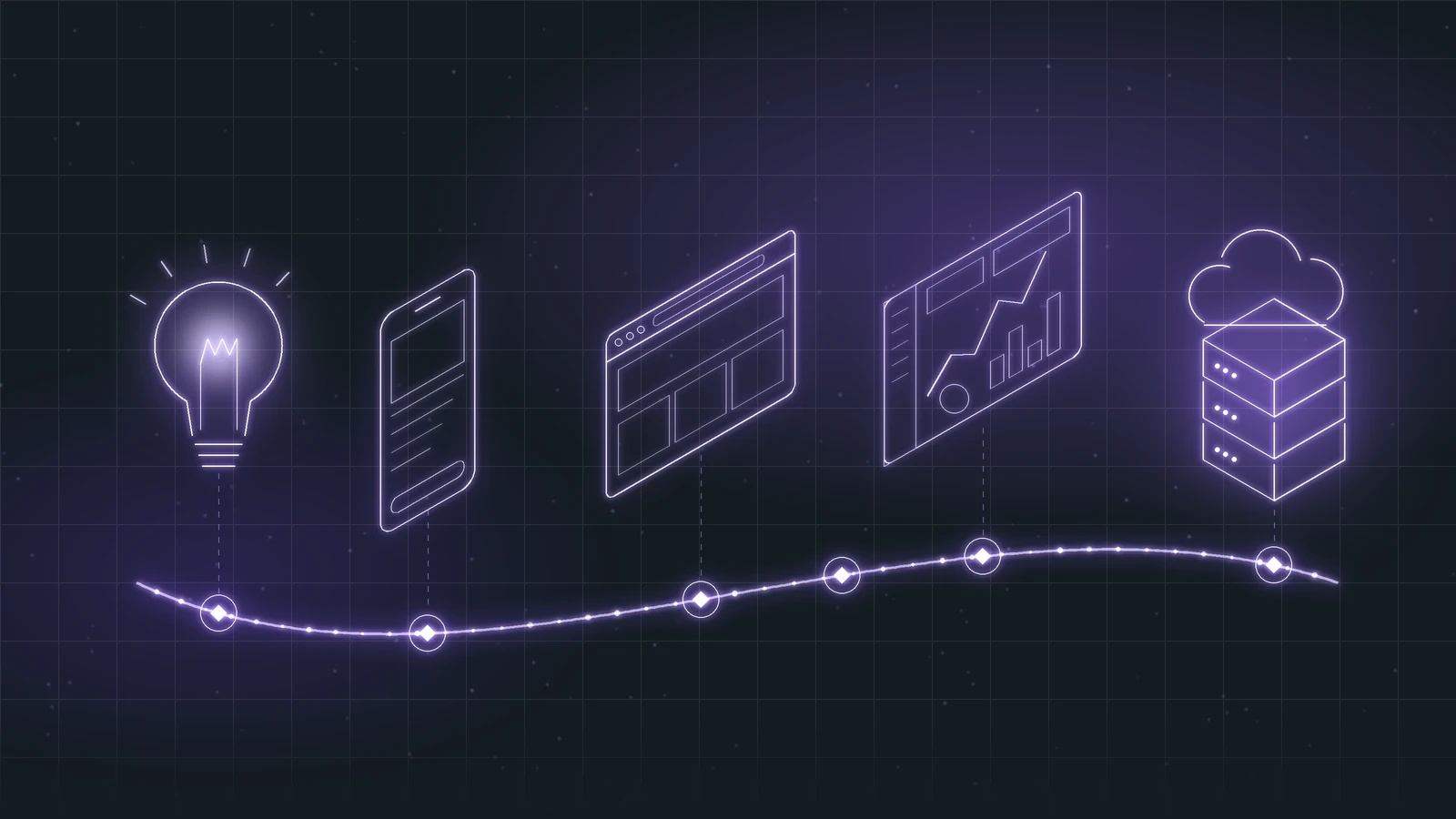
At METRA, we build and run our own products, so we've lived this from both sides. Here's the roadmap we follow to turn an idea into scalable software.
Step 1: Define the problem, not the feature list
Before screens and features, answer three questions:
Who has the problem?
What does it cost them today, in time, money or frustration?
How will you know the product solved it?
A one-page problem statement saves months of rework.
Step 2: Validate before you build
Talk to 10–20 real potential users. Show them a clickable prototype or even a simple landing page. If people won't give you 15 minutes of feedback, they're unlikely to pay you later.
Tip: Look for patterns in complaints, not compliments.
Step 3: Scope a lean MVP
Your Minimum Viable Product should do one core job extremely well. Cut everything that isn't essential to that job.
Include in MVP | Save for later |
|---|---|
Core user flow | Advanced settings |
Secure sign-up and login | Multi-language support |
Basic analytics | Complex dashboards |
Payment (if revenue is the test) | Integrations "nice to have" |
Step 4: Choose the right platform and architecture
Web app, mobile app or SaaS? The right choice depends on how your users work:
Web application: fastest to launch and update, works on any device.
Mobile application: best for on-the-go use, notifications and device features like camera or location.
SaaS platform: for products sold on subscription to many businesses, which needs multi-tenant architecture, billing and admin tools from day one.
Whatever you choose, design the architecture to scale: clean APIs, a sensible database structure and cloud infrastructure that can grow without a rewrite.
Step 5: Design AI and security in from the start
Two things are expensive to add later:
AI. Ask early where intelligence creates value: smart search, recommendations, document processing, chat support or AI agents that automate workflows. Planning for AI from the start shapes your data model and saves costly refactoring.
Security. At METRA, security is built in from the first sprint: authentication, role-based access, encrypted data and secure APIs. Retrofitting security after launch is slower, riskier and more expensive.
Step 6: Launch, measure and iterate
Launch is the beginning, not the finish line. Track:
Activation: Do new users reach the core value quickly?
Retention: Do they come back?
Feedback: What do they ask for most?
Ship improvements in short cycles. The best products are built in public with real users, not perfected in private.
Common mistakes to avoid
Building everything at once instead of an MVP
Picking technology because it's trendy, not because it fits
Ignoring performance and scalability until users complain
Treating your development partner as a vendor, not a long-term team
Why build with METRA?
METRA is a product company that also builds for you. We've designed, built and run our own platforms, including CyberBrox, Quizion Academy and interactive science tools like our Periodic Table and Spectroscopy Atomic Lab, so we know what it takes to ship and sustain a product.
Our team offers:
Web, mobile and SaaS product development
AI-powered websites and intelligent business applications
AI integration, AI agents and workflow automation
Technology consulting and digital product engineering
IoT and connected solutions
Have an idea? Let's build what's next. Start a project with METRA.